


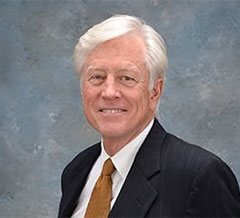
 James O. Cunningham
  Bicycle Accidents
 Pedestrian Accidents
 Construction Accidents
 Dog Bites
 Premises Liability
 Product Liability
 Medical Malpractice
 Nursing Home Abuse
 Aviation Accidents
 Lockheed Martin Lawsuits
 Boating Accidents
 Cruise Ship Accidents
 Mesothelioma
 Amusement Park Accidents
 Camp Lejeune Lawsuits
April, 2010 | Orlando Accident & Injury Blog Archive
Toyota Recall Accident Lawyer News: Toyota U.S.A. January 16 Internal Memo Surfaces Advising Company to Come Clean on Safety Issues
For the many U.S. government officials, consumer advocates and others looking critically at Toyota’s response to its enormous 2009 recall, there’s breaking news that makes the picture beyond corporate walls much clearer.
Toyota has turned over a vast amount of information, some of which has gotten through to the Associated Press. In it are e-mails from one Toyota executive suggesting that the company should “come clean” about the acceleration problems that are now the primary focus of the recall campaign.
Toyota Recall Accident Lawyer News: Toyota President Blames Communication, Not Defective Vehicles, for Crisis
In a surprise statement to market analysts April 7, the chairperson of the Toyota Company, Mr. Akio Toyoda, indicated he feels “communications,” not defective vehicles, were to blame for the current situation in which Toyota finds itself. Toyota is experiencing a recall of over 8 million vehicles, many reports of sudden or unintended acceleration by Toyota drivers and intense scrutiny from government officials including congressional panels and the U.S. National Highway Traffic Safety Administration.
Toyota Recall Accident Lawyer News: Recall and Repair Instruction Dates Differ Between North America and Europe
More details are coming out about this year’s massive Toyota recall including information about who knew what and when. As the U.S. National Highway Traffic Safety Administration prepares to pursue fines and penalties against the Toyota for what it considers to be a pattern of inaction on major safety issues, officials are looking at a timeline for how various national agencies were notified about problems with accelerator pedals in Toyota vehicles.
Toyota Agrees To Pay Record Fine
Toyota Motor Corporation recently agreed to pay a record $16.4 million fine for its failure to alert U.S. safety officials in a timely manner about a dangerous defect in its accelerator pedals but flatly denied that it had broken any laws. U.S. Department of Transportation Secretary Ray LaHood said that “by failing to report known safety problems as it is required to do under the law, Toyota put consumers at risk.” Toyota agreed to pay the fine “to avoid a protracted dispute and possible litigation.” Toyota recall accident attorney James O. Cunningham continues to monitor this story with great interest.
Resource link: Toyota pays Record $16.4 Million Fine
Orlando Infantino Sling Recall Injury Lawyer Concerned about Latest Sling Recall
The U.S. Consumer Product Safety Commission (CPSC) is alerting parents about possible suffocation risks associated with using two models of infant slings manufactured by Infantino LLC, of San Diego, CA. The “SlingRider” and “Wendy Bellissimo” models of Infantino infant slings have been recalled in the U.S. and Canada. Parents of children younger than four months of age are cautioned to discontinue using these models of infant slings due to a risk of suffocation and contact the manufacturer for a free replacement.
Florida Personal Injury Law: Joint and Several Liability
Joint and several liability describes a situation where two or more parties are responsible for causing an injury to another party whether they were working together in concert or not. An easy example of joint and several liability that everyone can relate to would be a multiple car accident where one driver collides with another which, in turn, causes another collision between drivers attempting to avoid the first collision. Like most other legal terms, there are many factors that come into play when determining joint and several liability. If you have been injured in an auto accident or other type of accident caused by more than one party, an experienced Orlando personal injury attorney such as James O. Cunningham can explain if and how joint and several liability pertains to your case.
Personal Injury Law: Vicarious Liability
Vicarious liability is also known as a secondary liability, which in non-technical language means that a person in charge is liable for the acts of someone who is a subordinate. In legalese, vicarious liability describes the responsibility of someone that has the “right, ability or duty to control” the activities of someone who caused injury of some kind to another person. The most easily accessible example of vicarious liability is an employer being vicariously liable for the acts of an employee who is “on the clock.” However, as you might guess, it’s not as simple as that. Many different factors come into consideration when determining vicarious liability. Orlando personal injury lawyer James O. Cunningham can explain these factors in detail during a consultation and answer any other questions you may have.
Florida Personal Injury Law: Affirmative Defenses
An affirmative defense is a legal defense used in criminal law cases as well as lawsuits between private parties. Depending on the specifics of a case, affirmative defenses can also be called justification defenses or less often, excuse defenses. Simply put, affirmative defenses are used to avoid, excuse or limit liability in a criminal or civil case.
Florida Personal Injury Law: Burden of Proof
Movies and television often use legal terms like “burden of proof” as plot devices and bend their meanings a bit to create more drama. Phrases such as “proving beyond a shadow of a doubt” do not exist in the legal world despite their enduring popularity in TV and movie scripts. If a personal injury case in Florida goes to a civil jury trial, cases must be proven through a phrase that does exist in the legal world, “preponderance of the evidence.” For a more detailed explanation of burden of proof, preponderance of evidence or another legal term, contact experienced Orlando personal injury attorney James O. Cunningham. Many of these legal terms are not easily accessible, and if you or someone you care for has been injured, you really should have a Central Florida personal injury lawyer explain them in detail.
Florida Personal Injury Law: Statutes of Limitations
Most people understand correctly that a statute of limitations establishes the period of time in which a lawsuit can be filed after the cause of action occurred. There are different statutes of limitations depending on the cause of action, the jurisdiction and other factors. If too much time has expired after the cause of action occurred, the statute of limitations comes into effect, and the injured party’s window of opportunity for filing a lawsuit has closed. If you’re thinking of pursuing litigation, you should speak to a Central Florida personal injury lawyer without delay.

 Mr. Cunningham is an excellent and knowledgeable attorney.